
Biology · BGCSE / Reproduction
StructuredPast exam questionForm 5 · BGCSE
Fig. 7.1 shows stages R1 to R4 of the reproduction of a fresh water organism (a single-celled organism with a flagellum and one nucleus; at R2 the nucleus has doubled, at R3 the cell widens with two nuclei and two flagella, at R4 it splits lengthwise).
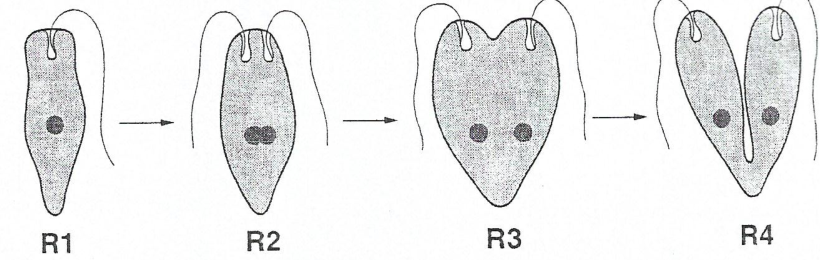
- aName the group to which the organism belongs and outline the characteristics which distinguish it from bacteria. [4]
- bDescribe and explain stages R1 to R4. [5]
You'll mark your own answer against the marking guide when you hand it in.
Source: BEC BGCSE Biology 2011, Paper 3, Question 7(a)
Report a problem
More like this
- Where does fertilisation usually happen in humans?
- Which is an advantage of asexual reproduction?
- Which method protects against both pregnancy and sexually transmitted infections?
- Fig. 3.1 shows the male reproductive system.
- Fig. 6.1 shows a method of asexual reproduction used in commercial farming: a piece of stem planted in a pot grows new shoots.
- Match each part of the human reproductive system with its function. The first one has been done for you: mammary glands — secrete milk to nourish you…
- Asexual and sexual reproduction.
- Fig. 5.1(a) and Fig. 5.1(b) show two methods by which a baby may be fed milk: (a) from a bottle; (b) at the mother's breast.