
Biology · BGCSE / Inheritance and genetics
StructuredPast exam questionForm 5 · BGCSE
Fig. 5.1 shows different stages of meiosis in an animal cell. Stage A shows the chromosomes (two long, two short); in stage B the chromosomes are in homologous pairs; stage B produces two cells at stage C, which each produce two cells at stage D.
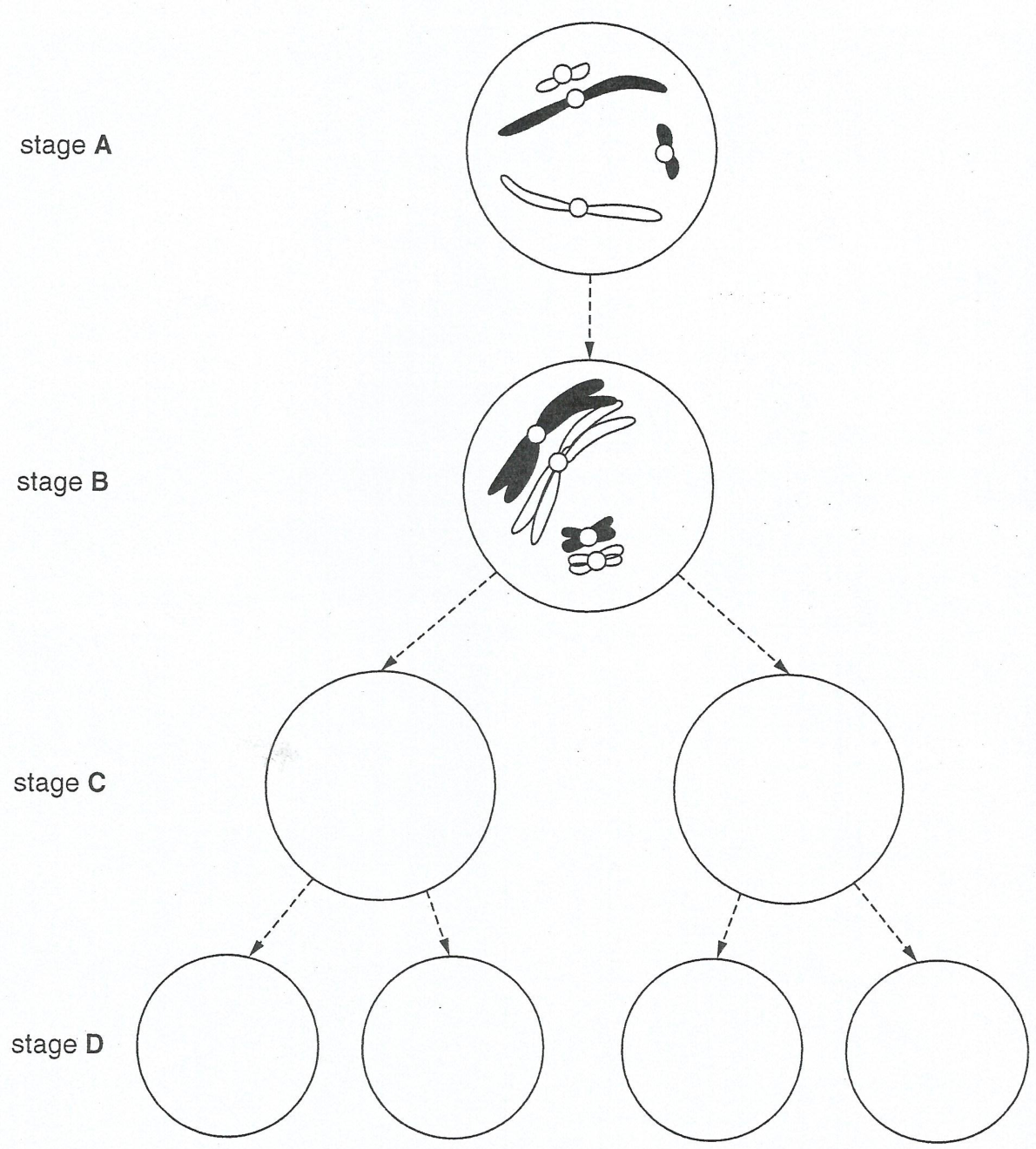
- aState the diploid number of chromosomes of the animal cell in stage A. [1]
- bSuggest a name of an organ in a mammal where the different stages of meiosis take place. [1]
- cName the stage of cell division shown at B and give one reason for your answer. [2]
- dDescribe the chromosomes that could be found in all cells at stages C and D (draw them on paper). [4]
You'll mark your own answer against the marking guide when you hand it in.
Source: BEC BGCSE Biology 2010, Paper 3, Question 5
Report a problem
More like this
- How many chromosomes are in a normal human body cell?
- A cross between two heterozygous tall plants (Tt × Tt) gives what ratio of tall to short?
- Which type of cell division produces gametes?
- Sex in humans is decided by…
- Blood groups A, B, AB and O are an example of…
- In cattle, the allele for no horns (polled, H) is dominant to the allele for horns (h). A farmer crosses a heterozygous polled bull with a horned cow.
- Distinguish between prophase in mitosis and prophase I in meiosis.
- Distinguish between continuous and discontinuous variation and give one example of each, other than blood groups.