
Chemistry · BGCSE / Rates of reaction
StructuredPast exam questionForm 5 · BGCSE
Ammonia is manufactured using the Haber process: N₂(g) + 3H₂(g) ⇌ 2NH₃(g), ΔH = −92 kJ/mol. The graph shows how the yield of ammonia changes with pressure at constant temperature.
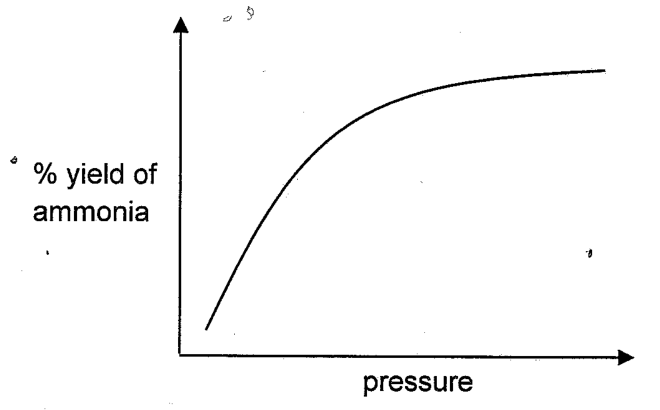
- aState two conditions required for the manufacture of ammonia by the Haber process. [2]
- bWhat conclusion can be drawn from the graph? [1]
- cState and explain how increasing the temperature affects the amount of ammonia produced in the process. [2]
You'll mark your own answer against the marking guide when you hand it in.
Source: BEC BGCSE Chemistry 2019, Paper 3, Question 5
Report a problem
More like this
- Which changes speed up a reaction?
- A catalyst…
- Marble chips react with dilute hydrochloric acid. A student measures the volume of gas every 30 seconds.
- An energy diagram for the production of ethanol by the addition of steam to ethene is shown.
- A student investigated the reaction of magnesium with dilute hydrochloric acid at 25 °C: Mg(s) + 2HCl(aq) → MgCl₂(aq) + H₂(g). The volume of hydrogen…
- A student carried out experiments using calcium and water. In experiment I, a cleaned piece of calcium of mass 0.6 g was added to 200 cm³ of water: C…
- The diagram shows the stages during the manufacture of sulphuric acid by the Contact Process.
- Sulphur trioxide, SO₃, is produced from sulphur dioxide, SO₂: 2SO₂(g) + O₂(g) ⇌ 2SO₃(g).